Help in understanding the Bible
Knowing God Ministries is committed to helping everyone better understand the Bible. This will both encourage discipleship and enable a better understanding of the Christian faith.
Serious about helping people understand God’s revelation
The Apostle Matthew recorded a final commission given by Jesus to His disciples before He ascended to heaven. This is popularly known as the Great Commission and is found in Matthew 28:18-20. In this Great Commission Christ commanded His disciples to make disciples from all nations in the world as they would go about their lives.
Knowing God Ministries is committed to helping everyone gain a better understanding of the Bible, God’s written revelation to humanity. This will prove helpful for anyone, but it is indispensable for every believer in Christ.
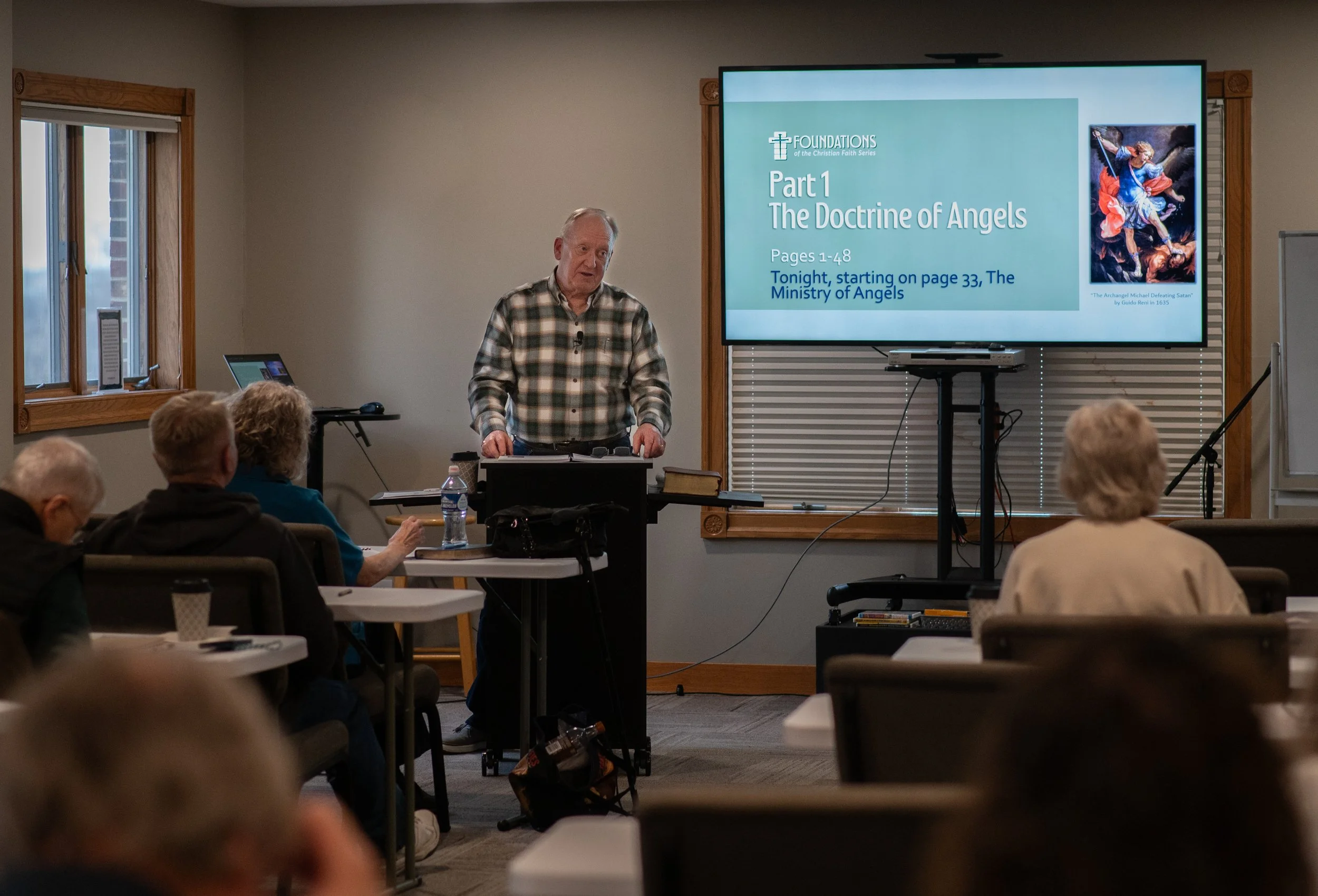
This goal is accomplished through the Foundations of the Christian Faith series, and the Studies in Books of the Bible Series.

The Foundations series covers 9 basic doctrines of the Christian faith.
Each of the nine parts has its own syllabus. Each syllabus has various divisions.
Teaching the classes requires ten sessions for each of the nine parts, 20 hours overall for completion of each part.
The link below will take you to audio recordings of the classes.
101 - What is the Bible?
102 - What is God like?
103 - Who is Jesus Christ?
104 - Who is the Holy Spirit?
105 - What does the Bible say about Angels, Satan, and Demons?
106 - What are the origins of people and sin?
107 - What does the Bible say about salvation?
108 - What is the church?
109 - How will the world end?

The Studies in Books series presents in depth studies of various books of the Bible.
These book studies are divided and accomplished through one-hour classes for the divisions.
Study plans are posted on this site, as well as some audio recordings. The link below will take you to these options.
The method of interpretation in these studies is the literal, historical, grammatical approach. This is simply a normal method for understanding the Bible in basically the same manner any book is understood.
Literal – To interpret words literally means that the words and what they describe are taken to be what they are. People and events are real. A figure of speech is exactly that; miracles are facts, and so forth.
Historical – The people and events of the Bible existed, and the descriptions preserved in the pages of the Bible are accurate. The cultures, manners, and customs of the times must be considered for accurate interpretation.
Grammatical – It is imperative to understand the rules of grammar, the meanings of words, and the construction of sentences. The Scriptures were written in three languages and the interpreter should be able to work in these languages.